Rahul
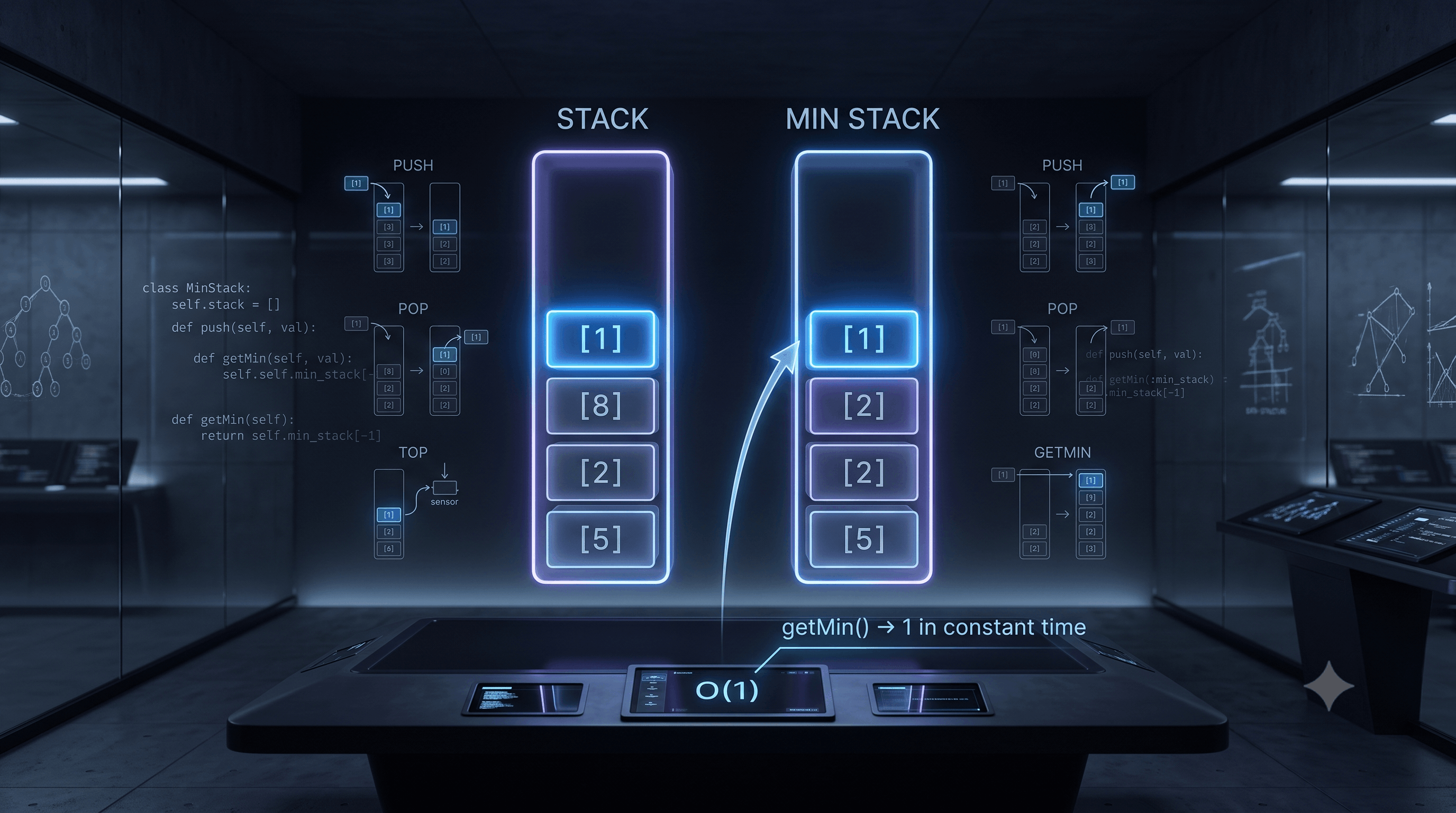 LeetCode #155: Min Stack — Design a Stack with O(1) Minimum Retrieval
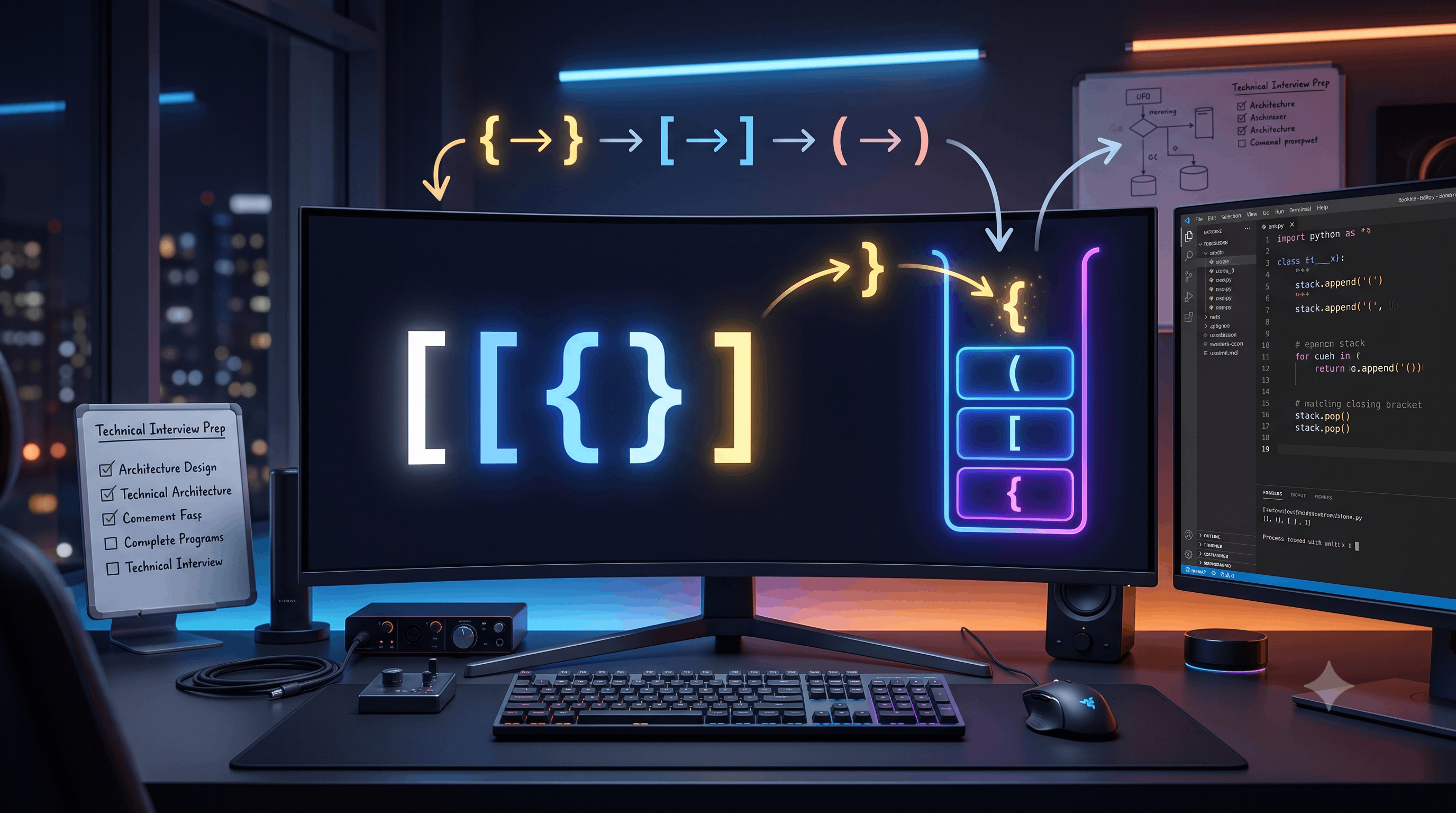 LeetCode #20: Valid Parentheses — Master the Stack Pattern
 LeetCode #15: 3Sum — Master Sorting, Two Pointers and Duplicate Handling
 Instruction vs Context in AI Prompts: How to Tell AI What to Do and What Information to Use
 Rust Structs and Enums: Building Powerful Data Models
 Dissecting the High-Level System Architecture of Booking.com
 Kanban vs. Scrum: Which Agile Methodology to Choose?
 The Scaling Journey of LinkedIn: From Startup to Professional Powerhouse
 Mastering Code Review: A Guide for Reviewers and PR Creators
 ChatGPT: Unveiling the Power of AI in Conversational Experiences with Kairos Coders

Kairos Coders are here to help
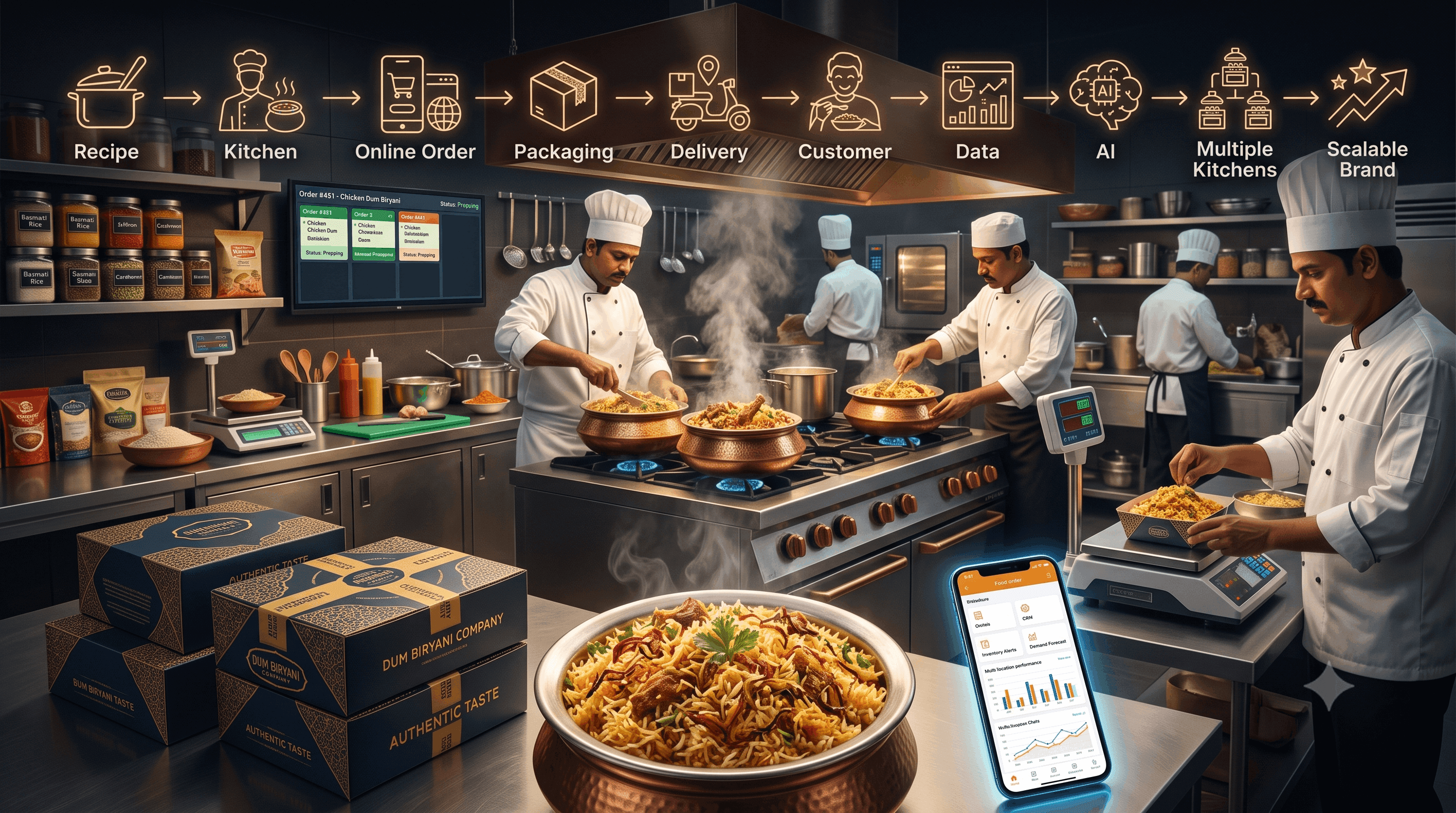
Biryani is not just another item on an Indian restaurant menu.
It is a business category of its own.
There are budget biryani outlets, premium biryani brands, cloud kitchens, dine-in restaurants, catering businesses and delivery-first brands—all competing for the same basic customer desire:
“I want a really good biryani, delivered hot, consistently, at a price I am comfortable paying.”
And that makes biryani an interesting business opportunity.
But opening a biryani business isn't simply about buying a large cooking pot and finding a good recipe.
You need to understand:
Product → Menu → Kitchen → Food Cost → Packaging → Delivery → Marketing → Technology → Customer Retention → Scaling
Some of India's well-known biryani businesses demonstrate different parts of this journey.
Biryani has several characteristics that make it attractive to entrepreneurs.
It can be sold through:
A single kitchen can therefore potentially serve several different revenue channels.
The key is building the economics correctly.
There isn't one biryani business model.
You could start with:
Lower infrastructure requirement and focused on local customers.
Designed primarily around online orders and delivery.
Small dine-in + takeaway + delivery.
Higher investment, ambience and broader customer experience.
Large-volume orders for events and organizations.
A standardized model designed for replication.
Your first decision should therefore be:
What business are you actually building?
Rather than copying another restaurant, study what problem each successful business solved.
Biryani By Kilo has built its identity around freshly prepared dum-cooked biryani served in the handi in which it is cooked. Its official site describes the brand as a pioneer of the handi-biryani concept and highlights its use of standardized processes and technology.
Packaging + preparation + presentation can become part of the product.
The customer isn't just buying biryani.
They're buying an experience.
Behrouz Biryani is part of the Rebel Foods ecosystem.
Rebel Foods says it started with Faasos, experimented with the cloud-kitchen model, and subsequently launched a multi-brand cloud-kitchen model that included Behrouz Biryani. Its current description emphasizes technology, standardized processes, multi-channel ordering and shared kitchen infrastructure.
A food brand can be designed around digital distribution from day one.
You don't necessarily need a huge dining room to build a recognizable food brand.
Paradise Restaurant has a completely different story.
Paradise says it began as a modest café in 1953 and grew into a restaurant chain associated strongly with Hyderabad and Hyderabadi cuisine. It also highlights standardized operating procedures, supply-chain management and technology as part of maintaining consistency across outlets.
Heritage + consistency + systems can become a competitive advantage.
This is particularly important if you're building a regional food brand.
This is important.
You shouldn't look at Biryani By Kilo and think:
"I'll also use a handi."
Or look at Behrouz and think:
"I'll make a premium delivery brand."
Instead ask:
Biryani By Kilo
→ Product experience
Behrouz
→ Digital-first brand building
Paradise
→ Heritage + consistency + scale
Then build your own positioning.
What kind of biryani will you sell?
You could focus on:
Don't make the customer guess.
Instead of:
"Authentic Biryani"
say something specific:
"Slow-cooked Hyderabadi-style dum biryani with aged basmati rice."
Specific positioning is easier to remember.
A new entrepreneur often makes this mistake:
"Let's keep everything."
Biryani.
Pizza.
Momos.
Burger.
Chinese.
Rolls.
Pasta.
Shakes.
Desserts.
That's not a restaurant.
That's an inventory nightmare.
Start with a focused menu.
Biryani
Sides
Starters
Dessert
Beverages
That's enough to start testing demand.
Your brand should have something people remember.
For example:
"The chicken biryani everyone orders."
Your menu might contain 15 products.
But one product could generate:
30–40% of orders.
That's your hero.
Track it.
Improve it.
Market it.
Instead of selling one biryani size, consider:
₹199–₹299
₹299–₹399
₹599–₹899+
₹1,500+
Exact pricing depends heavily on your city, food cost, positioning and competition.
The important concept is:
Different customers should have different entry points.
Imagine a customer ordering dinner for four.
Instead of selling:
4 × ₹249
you could offer:
The objective is to increase:
Average Order Value (AOV)
while making the purchasing decision easier.
A biryani business shouldn't depend entirely on individual delivery orders.
Potential customers include:
A single corporate order can potentially equal dozens of individual orders.
This is where operations become interesting.
Unlike a burger that may be assembled one order at a time, biryani can involve batch preparation.
That creates an important problem:
How much should you prepare?
Prepare too little:
Lost sales.
Prepare too much:
Waste.
Imagine your system has historical data:
| Day | Orders |
|---|---|
| Monday | 110 |
| Tuesday | 125 |
| Wednesday | 118 |
| Thursday | 140 |
| Friday | 210 |
| Saturday | 290 |
| Sunday | 260 |
You can begin forecasting demand.
Instead of saying:
"Saturday is usually busy."
your system can eventually say:
Expected Saturday demand: 305 orders.
That's a completely different way of running the business.
Daily forecasting isn't enough.
Suppose your Saturday looks like:
12 PM     30 orders
1 PM      70 orders
2 PM      55 orders
3 PM      15 orders
4 PM      10 orders
5 PM      18 orders
6 PM      30 orders
7 PM      65 orders
8 PM      90 orders
9 PM      75 orders
Now you know where the operational pressure will occur.
You can plan:
A recipe shouldn't exist only inside the chef's head.
Document:
Ingredients
Weight
Preparation
Cooking time
Temperature/process
Portion
Plating
Packaging
That turns:
"Chef's experience"
into:
"Business process."
Imagine three employees prepare your chicken biryani.
Employee A:
180g chicken
Employee B:
220g
Employee C:
150g
The customer experience changes.
Your food cost changes.
Your margins change.
Therefore use:
Typical inventory might include:
The system should know:
What came in?
What was used?
What remains?
What is expiring?
What needs to be reordered?
Suppose one chicken biryani uses:
250g rice
180g chicken
20g onion
X grams spices
X ml oil
If you sell:
100 units
your software can estimate expected ingredient consumption.
Then compare:
vs.
If there's a significant difference, investigate.
Let's create a hypothetical example.
Selling price:
₹299
Illustrative direct costs:
| Component | Cost |
|---|---|
| Rice | ₹25 |
| Chicken | ₹65 |
| Spices/onion/oil | ₹25 |
| Raita/salan | ₹15 |
| Packaging | ₹20 |
| Total | ₹150 |
Contribution before other operating expenses:
₹299 − ₹150 = ₹149
But this is not net profit.
You still need to account for:
Imagine:
₹15 lakh monthly revenue
sounds fantastic.
But suppose total operating expenses are:
₹14.2 lakh
Your remaining operating profit is only:
₹80,000
Now imagine another business:
₹10 lakh revenue
with:
₹2 lakh operating profit.
Which business would you rather own?
Exactly.
Revenue is vanity. Unit economics are reality.
Suppose your monthly fixed costs are:
₹4,00,000
and your average contribution per order is:
₹160
Break-even orders:
₹4,00,000 ÷ ₹160 = 2,500 orders/month
At 26 operating days:
≈ 96 orders/day
This is only an illustrative model.
Your actual contribution must be calculated from your own costs.
Biryani has a unique delivery challenge.
It's:
Your packaging must protect:
Temperature
Texture
Leakage
Presentation
A ₹300 biryani arriving in a leaking container can feel like a ₹100 product.
Biryani By Kilo has made the cooking vessel itself part of its customer experience.
Its official material emphasizes freshly prepared dum-cooked biryani, with the biryani cooked in the same earthen handi used for serving/delivery.
That's a powerful branding lesson:
Sometimes packaging doesn't just contain the product—it becomes the product experience.
Before purchasing thousands of containers:
Test:
30-minute delivery
45-minute delivery
60-minute delivery
Evaluate:
Then make your decision.
A common mistake is trying to deliver everywhere.
Suppose your ideal food experience lasts:
30–40 minutes.
But you start accepting orders:
8–10 km away.
Your food might arrive cold.
Customer gives:
⭐ 2 stars
Your kitchen may have prepared everything perfectly.
The delivery radius destroyed the experience.
Imagine your orders look like this:
0–2 km     █████████████
2–4 km     █████████████████
4–6 km     █████████
6–8 km     ███
8+ km      █
Now you know where your strongest customers are.
This is much more useful than guessing.
Don't choose your second location because:
"Rent is cheap here."
Analyze:
If customers are concentrated in an underserved area, that may be a much stronger expansion signal.
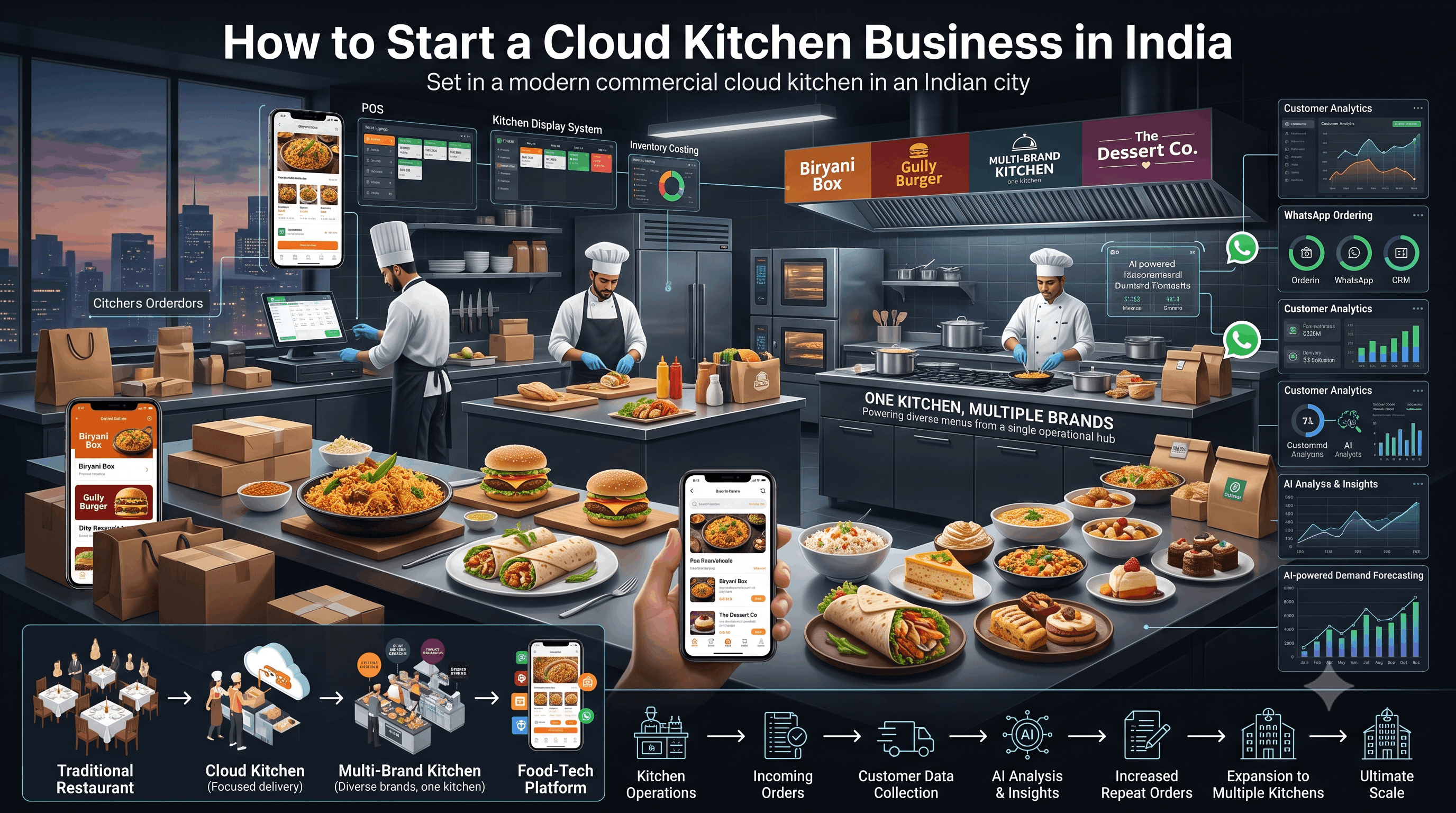
Rebel Foods explicitly describes its model as "One Kitchen Multiple Brands." Its current material describes shared infrastructure, food technology and systems designed to standardize operations across kitchens.
Its journey is particularly interesting:
Faasos
↓
Cloud Kitchen
↓
Multi-Brand Cloud Kitchen
↓
Food-Tech Platform
Rebel says Behrouz Biryani was among the brands launched during its multi-brand cloud-kitchen phase.
The kitchen can become infrastructure, while the brand becomes the customer-facing layer.
This sounds exciting:
Biryani Brand
Momos Brand
Burger Brand
Pizza Brand
Chinese Brand
One kitchen.
Five menus.
But complexity increases rapidly.
Start with:
Then scale.
Delivery platforms can provide discovery and distribution.
But your long-term strategy should also consider:
Your own website
QR ordering
Loyalty
CRM
Repeat ordering
Why?
Because the customer relationship becomes more valuable when you can understand and serve your customers directly, subject to applicable platform terms and regulations.
Customer opens your website.
They see:
Your Last Order
Chicken Biryani + Raita + Coke
One click.
Payment.
Done.
The less friction you create, the easier repeat purchasing becomes.
Imagine:
Customer:
Same as last time.
Your system:
Chicken Biryani Family Pack + 4 Raita — ₹699. Confirm?
Customer:
Yes.
Payment link.
Order created.
Kitchen notified.
Customer receives:
Your order is being prepared.
That's:
WhatsApp + CRM + Ordering + Kitchen Management
working together.
Your CRM could show:
CUSTOMER: Rahul

Orders: 23

Average Order Value: ₹468

Favourite:
Chicken Biryani

Typical Day:
Saturday

Typical Time:
8 PM

Family Orders:
6

Lifetime Spend:
₹10,764

Last Order:
24 days ago
Now marketing becomes data-driven.
Instead of sending:
20% OFF EVERYTHING!!!
to everyone.
You could create segments.
"Welcome! Here's something special for your second order."
"Your favourite biryani is back."
"Exclusive family feast."
"We haven't seen you in a while."
This is CRM.
Imagine your business has:
10,000 reviews.
AI categorizes them:
Taste              94% positive
Quantity           88%
Packaging          82%
Delivery           71%
Raita              89%
Price              64%
Then it identifies:
Most common negative feedback: food arriving cold beyond 6 km.
Now you have a decision.
Maybe:
Reduce delivery radius.
Or:
Improve packaging.
Or:
Open another kitchen.
Technology turns thousands of reviews into business decisions.
Your system could eventually predict:
Tomorrow's estimated demand: 347 orders
Then recommend:
Rice: 86 kg
Chicken: 61 kg
Mutton: 18 kg
Packaging: 360 units
Staff: 8
These numbers would be generated from your own historical sales and operational data—not simply guessed.
Imagine your dashboard says:
🔴 Chicken stock: 1.2 days
🟡 Packaging: 2.1 days
🟢 Rice: 7.4 days
Then:
Recommended purchase: 75 kg chicken
Technology prevents the owner from discovering stock problems at 8 PM during dinner rush.
Suppose your system notices:
Saturday evening
historically creates:
12% excess preparation.
The AI could recommend:
Reduce pre-preparation by 8% between 5–7 PM.
Small improvements repeated every day can have a meaningful effect on profitability.
Instead of handwritten tickets:
ORDER #5812

2 × Chicken Biryani
1 × Raita
2 × Coke

08:12 PM

PREPARING
Kitchen staff can see the order digitally.
Statuses:
Received
↓
Preparing
↓
Quality Check
↓
Ready
↓
Dispatched
Suppose your average order takes:
24 minutes
to prepare.
Break it down:
Rice: 8 min
Chicken: 6 min
Assembly: 5 min
Packaging: 5 min
Now you can find bottlenecks.
That's operational intelligence.
Imagine you eventually have:
             BIRYANI OS
                  │
      ┌───────────┼───────────┐
      ↓           ↓           ↓
    DELHI      CHANDIGARH   AMRITSAR
      ↓           ↓           ↓
   Kitchen      Kitchen      Kitchen
      │           │           │
      └───────────┼───────────┘
                  ↓
              CENTRAL DATA
                  ↓
                  AI
The owner can see every branch from one dashboard.
Every branch receives the same:
Recipe
Portion
Cooking process
Packaging instructions
Quality checklist
This makes expansion easier.
At scale, supplier consistency becomes critical.
Track:
If chicken prices suddenly increase:
₹260/kg → ₹290/kg
your system should immediately show the potential impact on food cost.
Your dashboard should eventually classify products into:
High sales + high margin
High sales + lower margin
Low sales + high margin
Low sales + low margin
Then make decisions.
Maybe:
Promote Stars
Reprice Workhorses
Market Puzzles
Remove Dogs
This is where restaurant management becomes analytical.
A practical architecture could look like:
CUSTOMER
   ↓
Website / WhatsApp / QR
   ↓
Order Management
   ↓
POS
   ↓
Kitchen Display
   ↓
Inventory
   ↓
Procurement
   ↓
CRM
   ↓
Analytics
   ↓
AI
The technology shouldn't exist just because it looks impressive.
Every tool should answer:
What business problem does this solve?
A common startup mistake:
"We need an app."
Maybe you don't.
At the beginning, you may only need:
Build complexity only when the business needs it.
Biryani is extremely visual.
Create content around:
Your objective:
Make people hungry before they even see the menu.
You need something recognizable.
Maybe:
A signature handi
A signature masala
A signature raita
A signature packaging style
A signature serving ritual
A signature phrase
The more recognizable the experience, the easier it becomes to build a brand.
Suppose another restaurant sells:
₹149 biryani
and yours costs:
₹249
That's not necessarily a problem.
Your customer needs a reason to choose you.
Maybe:
Better meat
Better rice
Authentic preparation
Bigger portion
Premium packaging
Faster delivery
Better experience
Compete on value, not simply price.
Inventory becomes complicated.
Taste changes.
Margins disappear.
Delivery experience suffers.
Profit disappears.
Food arrives cold.
Repeat customers are lost.
Waste increases.
Losses multiply.
Start:
One Kitchen
↓
One Brand
↓
3–5 Core Products
↓
Find Hero Product
↓
Standardize Recipes
↓
Track Food Cost
↓
Launch Delivery
↓
Track Customers
↓
Build CRM
↓
Launch Loyalty
↓
Add Catering
↓
Add Corporate Orders
↓
Analyze Demand
↓
Open Kitchen #2
↓
Centralize Procurement
↓
Build Technology
↓
Multi-Branch
↓
Scale
| Business | Lesson |
|---|---|
| Biryani By Kilo | Product experience + distinctive packaging |
| Behrouz Biryani | Digital-first brand + delivery |
| Paradise | Heritage + consistency + systems |
| Rebel Foods | Shared kitchens + multiple brands + technology |
Biryani By Kilo specifically highlights technology, processes and systems for quality, standardization and hygiene.
Paradise similarly describes SOPs, supply-chain management and technology as important to maintaining operational consistency across outlets.
Rebel Foods goes even further by building technology and operating systems around multiple food brands and kitchens.
The biggest opportunity isn't necessarily:
"Open a biryani shop."
It is:
"Build a repeatable biryani business system."
There is a huge difference.
A shop depends heavily on:
Owner + Chef + Location
A scalable company depends on:
Brand + SOP + Technology + Data + People + Supply Chain
That's what allows expansion.
Imagine your Biryani Business OS sends you this notification at 4 PM:
╔════════════════════════════════════╗
║        BIRYANI BUSINESS OS         ║
╠════════════════════════════════════╣
║ SATURDAY FORECAST                  ║
║                                    ║
║ Expected Orders       347          ║
║ Expected Revenue      ₹1.42 Lakh   ║
║                                    ║
║ INVENTORY                          ║
║ Chicken               1.8 days 🔴  ║
║ Rice                  5.4 days 🟢  ║
║ Packaging             1.2 days 🔴  ║
║                                    ║
║ AI RECOMMENDATION                 ║
║                                    ║
║ Prepare +38 portions               ║
║ Order 65 kg chicken                ║
║ Order 400 containers               ║
║ Add 2 kitchen employees            ║
║                                    ║
║ CUSTOMER INSIGHT                  ║
║                                    ║
║ 84 VIP customers inactive          ║
║ for 30+ days                       ║
║                                    ║
║ MARKETING                          ║
║                                    ║
║ Launch family-pack campaign        ║
║                                    ║
║ DELIVERY ALERT                     ║
║                                    ║
║ Orders >7km have 18% higher        ║
║ complaint rate                     ║
╚════════════════════════════════════╝
Now technology isn't decoration.
It is helping the entrepreneur make decisions.
A local biryani shop can become:
Restaurant
↓
Brand
↓
Delivery Brand
↓
Cloud Kitchen
↓
Multi-Outlet Business
↓
Food-Tech Company
The difference isn't simply the food.
It's the system behind the food.
That's where technology enters.
And that's exactly the angle we want to explore in the Kairos Coders How to Start a Business series:
Take a traditional Indian business, understand how it actually makes money, and then add technology that makes it more efficient, measurable and scalable.
For a small startup kitchen, don't blindly assume a fixed investment.
Your actual cost depends on:
As a historical reference, Rebel Foods said in a 2021 interview that its own kitchen setup costs had risen substantially as its kitchens became more equipment- and storage-intensive; this should not be treated as a current startup quotation.
For a new entrepreneur, the better approach is to create a city-specific unit economics sheet before spending money.
Pixels to Perfection Design that Impresses