Rahul
 LeetCode #155: Min Stack — Design a Stack with O(1) Minimum Retrieval
 LeetCode #20: Valid Parentheses — Master the Stack Pattern
 LeetCode #15: 3Sum — Master Sorting, Two Pointers and Duplicate Handling
 Instruction vs Context in AI Prompts: How to Tell AI What to Do and What Information to Use
 Rust Structs and Enums: Building Powerful Data Models
 Dissecting the High-Level System Architecture of Booking.com
 Kanban vs. Scrum: Which Agile Methodology to Choose?
 The Scaling Journey of LinkedIn: From Startup to Professional Powerhouse
 Mastering Code Review: A Guide for Reviewers and PR Creators
 ChatGPT: Unveiling the Power of AI in Conversational Experiences with Kairos Coders

Kairos Coders are here to help
Artificial Intelligence has advanced rapidly over the past decade, enabling computers to recognize faces, understand speech, generate realistic images, translate languages, and even hold conversations. At the heart of many of these breakthroughs lies Deep Learning.
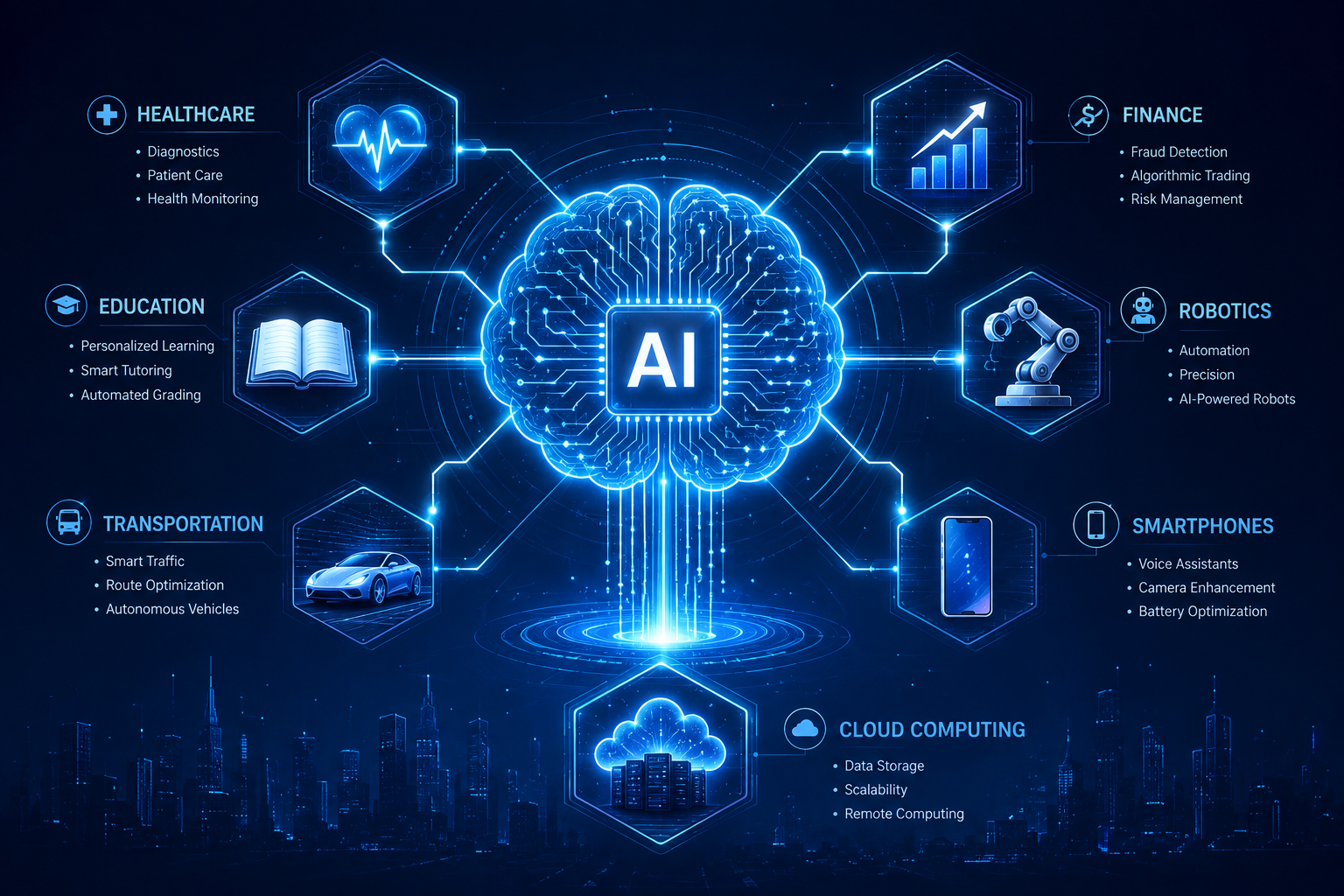
Deep Learning is the technology powering many of today's most impressive AI applications, including virtual assistants, recommendation systems, autonomous vehicles, medical image analysis, and generative AI models like ChatGPT and image generators.
But what exactly is Deep Learning? How does it differ from Machine Learning? Why has it become so important? And how do neural networks enable computers to solve problems that once seemed impossible?
This guide answers these questions in a clear, beginner-friendly way.
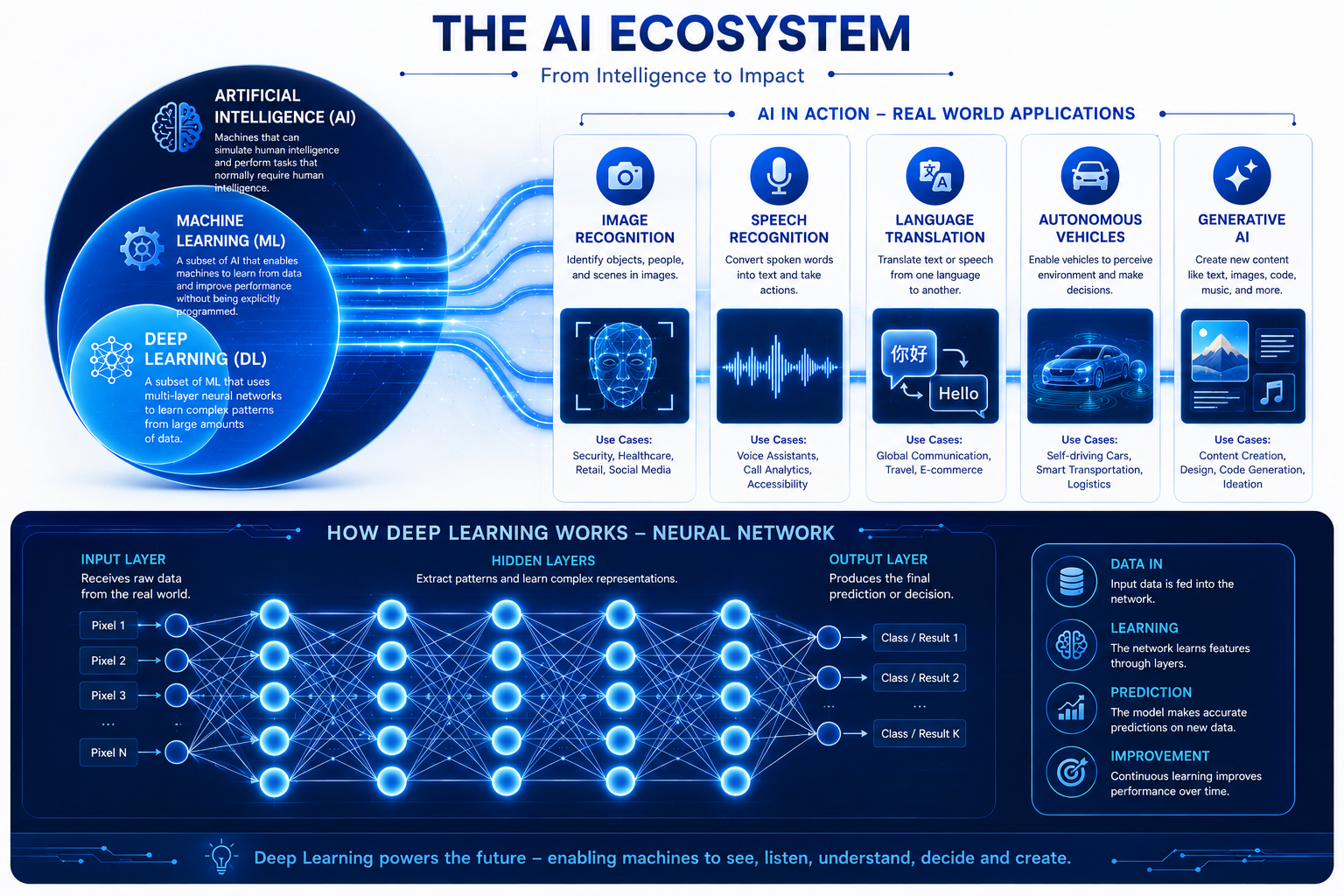
Deep Learning is a branch of Machine Learning that uses artificial neural networks with multiple layers to learn patterns from large amounts of data.
Unlike traditional Machine Learning algorithms that often require humans to identify useful features manually, Deep Learning systems can automatically discover these features during training.
Deep Learning is a Machine Learning technique that uses multi-layered neural networks to automatically learn complex patterns from data.
Imagine teaching two people to recognize cats.
You provide a checklist:
They identify cats using these rules.
Instead of giving rules, you show them one million pictures labeled:
Eventually, they naturally learn what makes a cat unique—even if they've never seen that particular breed before.
Deep Learning works similarly.
Rather than relying on manually defined rules, it learns directly from vast amounts of data.
The word deep refers to the number of layers inside a neural network.
A simple neural network might contain:
A deep neural network contains many hidden layers, allowing it to learn increasingly complex patterns.
For example:
Image

↓

Edges

↓

Shapes

↓

Objects

↓

Faces

↓

Identity
Each layer extracts more sophisticated information than the previous one.
The relationship between AI, Machine Learning, and Deep Learning can be visualized like nested circles:
Artificial Intelligence
│
├── Machine Learning
│      │
│      ├── Deep Learning
Every Deep Learning model is a Machine Learning model, but not every Machine Learning model uses Deep Learning.
Deep Learning existed in theory for decades, but only became practical when three key factors aligned:
The internet generated enormous datasets:
Large datasets allowed neural networks to learn more effectively.
Modern Graphics Processing Units (GPUs) can perform many calculations simultaneously, making it feasible to train deep neural networks.
Researchers developed improved optimization techniques, activation functions, and architectures, leading to dramatic performance improvements.
A Deep Learning system typically follows these steps:
Examples include:
The input data enters the first layer of the network.
Each layer processes the information and passes it to the next.
Instead of being told what features to look for, the network discovers useful patterns on its own.
For image recognition, it might learn:
Layer 1:
Layer 2:
Layer 3:
Layer 4:
Layer 5:
The model compares its prediction with the correct answer.
If it makes mistakes, it calculates how large the error is.
Using optimization techniques, the network adjusts millions—or even billions—of internal parameters to reduce future errors.
This process repeats many times until performance improves.
A neural network is a mathematical model inspired by the structure of the human brain.
It consists of interconnected processing units called neurons.
These neurons are organized into layers:
Input Layer

↓

Hidden Layer

↓

Hidden Layer

↓

Hidden Layer

↓

Output Layer
Each neuron receives information, performs calculations, and sends results to the next layer.
While inspired by biology, artificial neural networks are much simpler than real human brains.
Each artificial neuron performs three basic tasks:
Thousands or millions of these neurons work together to solve complex problems.
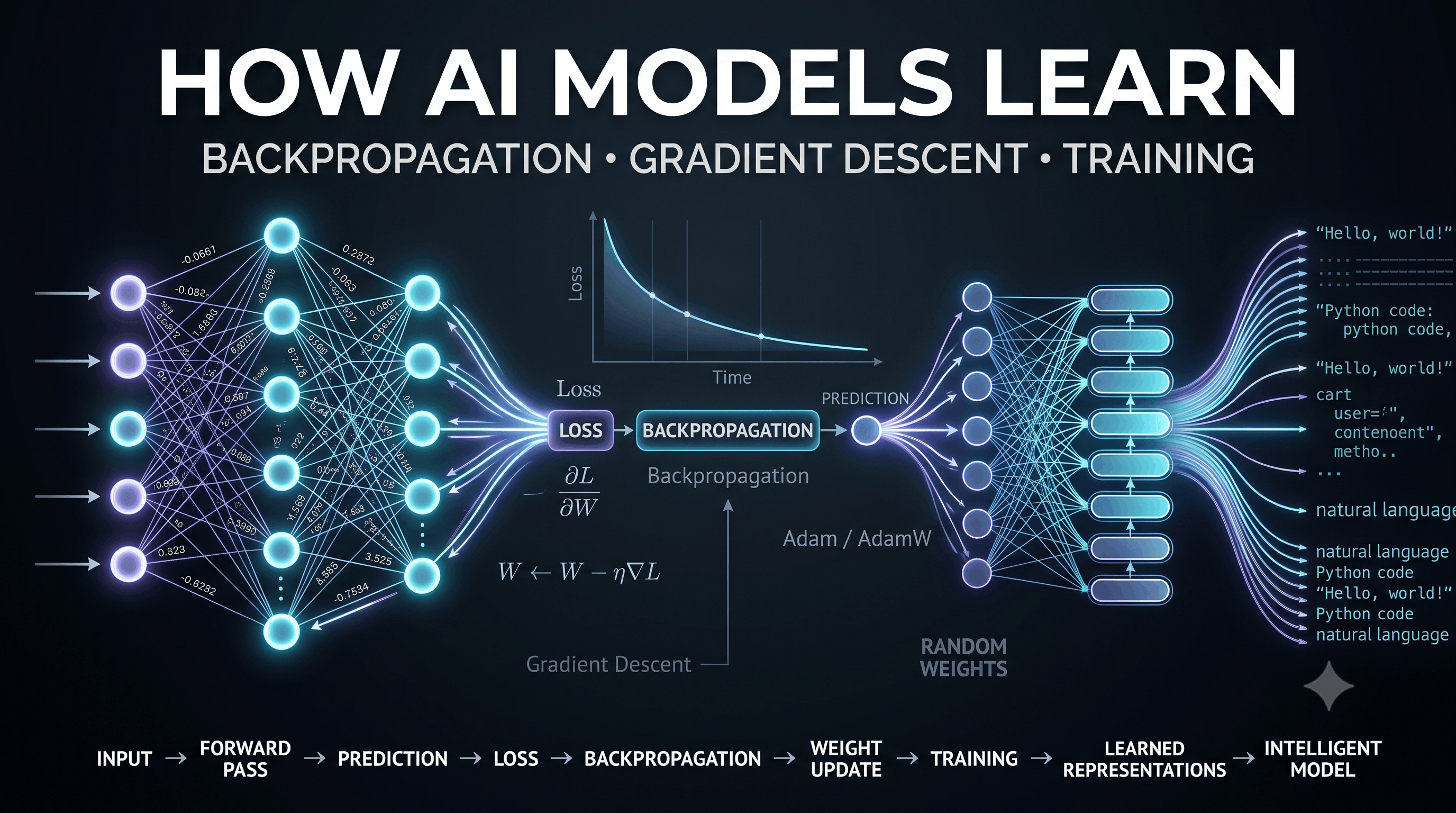
Training involves repeatedly improving the network.
The process generally includes:
The input moves through the network to produce a prediction.
The model measures how far its prediction is from the correct answer.
The network calculates how each parameter contributed to the error and adjusts them to improve future predictions.
This cycle repeats many times across the dataset until the model performs well.
Deep Learning includes several specialized neural network architectures.
The simplest type.
Information moves only in one direction—from input to output.
Commonly used for basic prediction tasks.
Designed for image-related tasks.
Applications include:
CNNs excel at identifying spatial patterns in images.
Designed for sequential data such as:
Although many modern systems now use Transformers, RNNs remain historically significant.
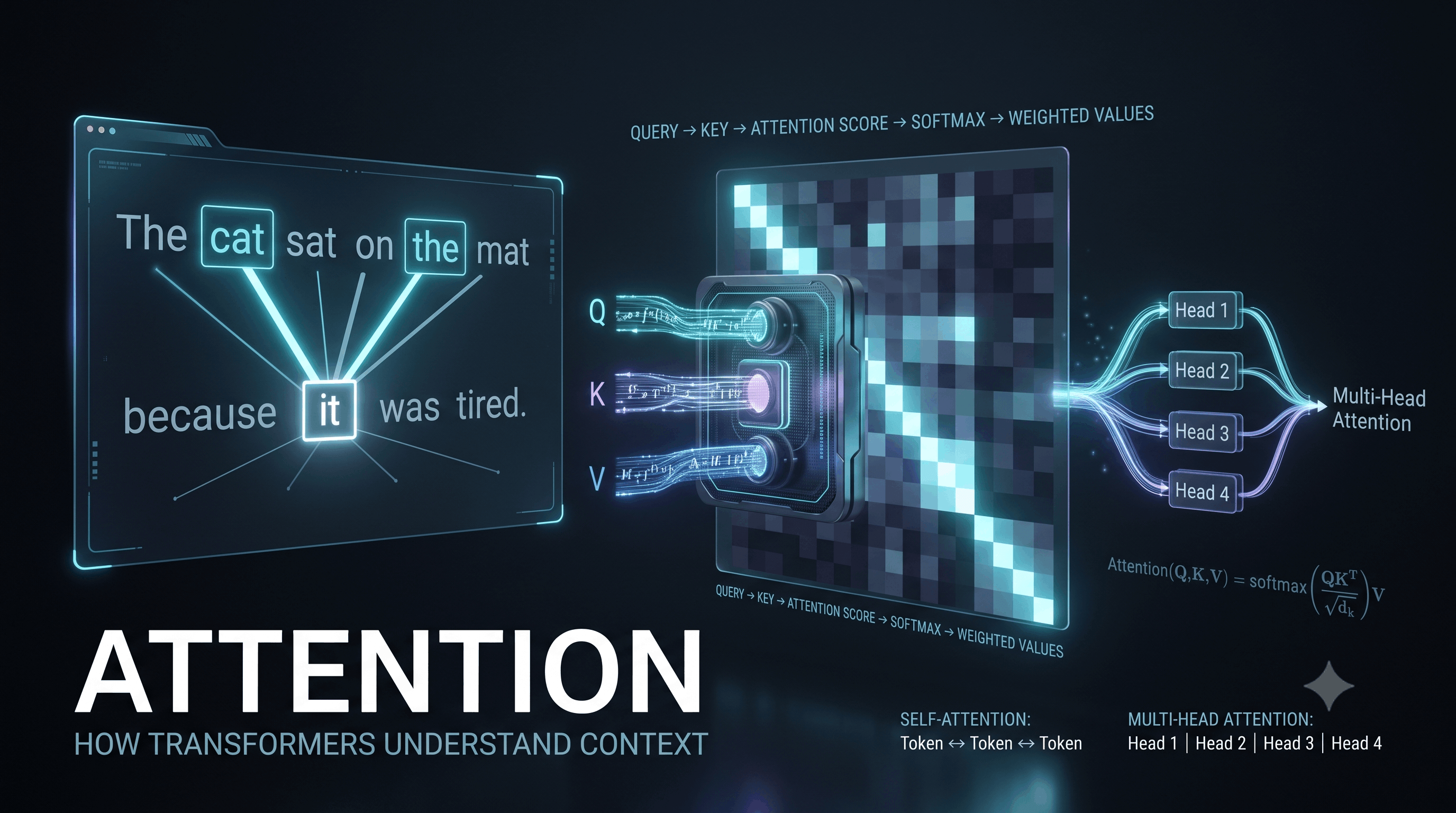
Introduced in 2017, Transformers revolutionized AI by processing relationships within sequences more efficiently than previous architectures.
They power many modern Large Language Models (LLMs) and multimodal AI systems.
Applications include:
Deep Learning helps vehicles:
Modern translation systems use Deep Learning to produce more natural translations between languages.
Speech recognition and natural language understanding in digital assistants rely heavily on Deep Learning.
Streaming platforms and online retailers use Deep Learning to personalize content and product suggestions.
Deep Learning enables systems to generate:
Reduces the need for manual feature engineering.
When trained with sufficient quality data, Deep Learning models often achieve state-of-the-art performance on many complex tasks.
Performance often improves as more data and computational resources become available.
Deep Learning supports diverse applications involving images, audio, video, and text.
Many Deep Learning models perform best with substantial amounts of high-quality data.
Training deep neural networks often requires specialized hardware and significant energy.
Large models may take hours, days, or even weeks to train.
Some Deep Learning models can be difficult to interpret, making it challenging to explain how specific decisions are made.
Models can learn biases present in training data, underscoring the importance of responsible dataset design and evaluation.
| Machine Learning | Deep Learning |
|---|---|
| Uses various algorithms | Uses deep neural networks |
| Often requires manual feature engineering | Learns features automatically |
| Works well with smaller datasets | Typically benefits from larger datasets |
| Lower computational requirements | Higher computational requirements |
| Easier to interpret in many cases | Often less interpretable |
Deep Learning is one branch of Machine Learning, which itself is a branch of Artificial Intelligence.
Deep Learning identifies patterns in data. It does not possess consciousness, emotions, or human-like understanding.
Not necessarily. For many structured datasets, traditional Machine Learning algorithms can perform just as well—or even better—while requiring fewer resources.
The concepts can be understood by beginners. Building advanced models professionally usually requires knowledge of mathematics, programming, and Machine Learning fundamentals.
It enables computers to solve complex problems involving images, speech, language, and other data types that are difficult for traditional algorithms.
Yes. ChatGPT is built using Deep Learning, specifically Transformer-based neural networks trained on large amounts of text.
No. Deep Learning is a specialized subset of Machine Learning.
Deep Learning has transformed Artificial Intelligence by enabling computers to tackle tasks once considered uniquely human. From recognizing faces and understanding speech to generating realistic images and assisting with scientific research, its impact is visible across industries.
As hardware continues to improve and new architectures emerge, Deep Learning will remain a cornerstone of AI innovation. Understanding its foundations prepares you for more advanced topics such as Neural Networks, Transformers, Large Language Models, and Generative AI.
Pixels to Perfection Design that Impresses