
Rahul
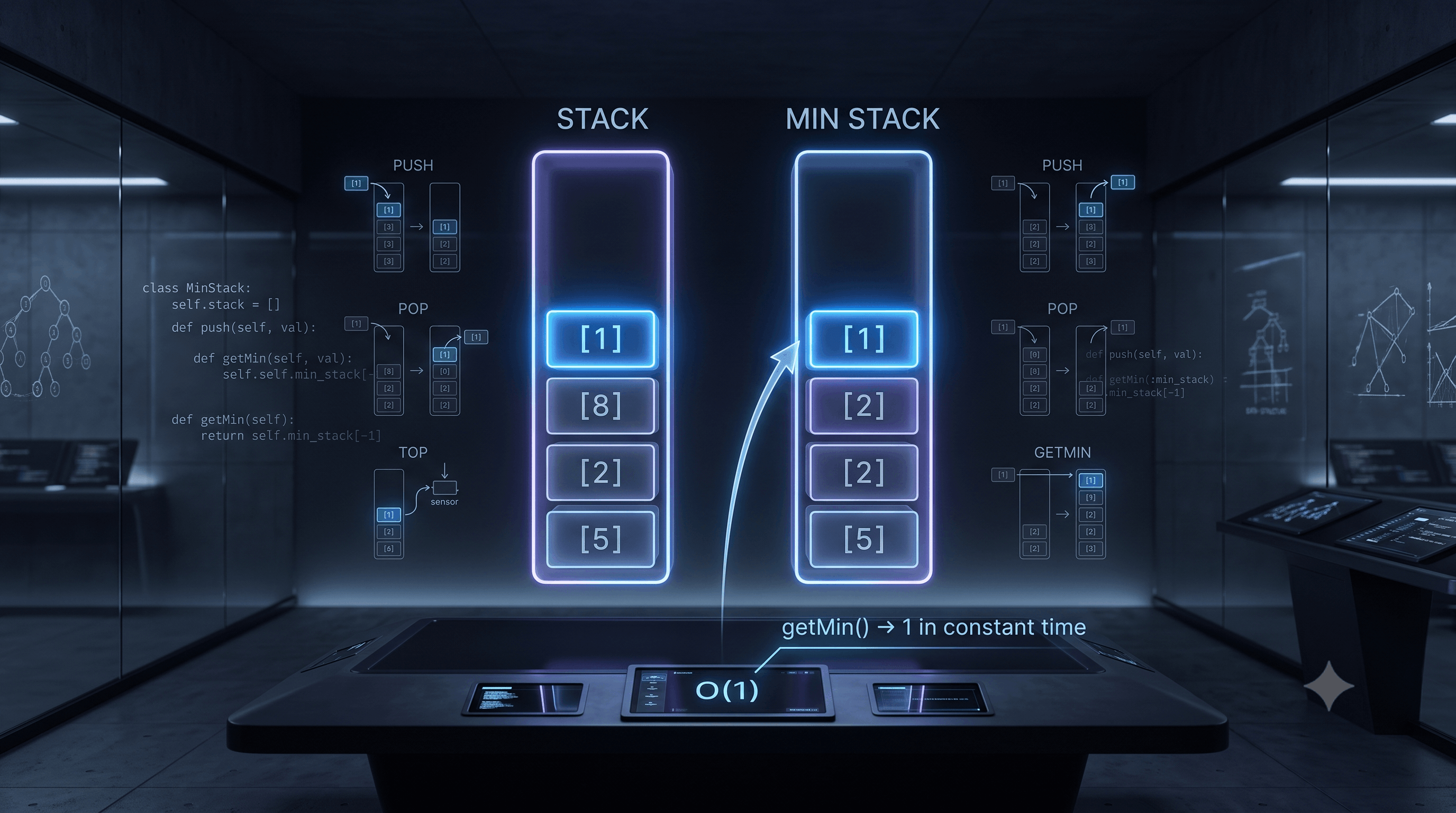 LeetCode #155: Min Stack — Design a Stack with O(1) Minimum Retrieval
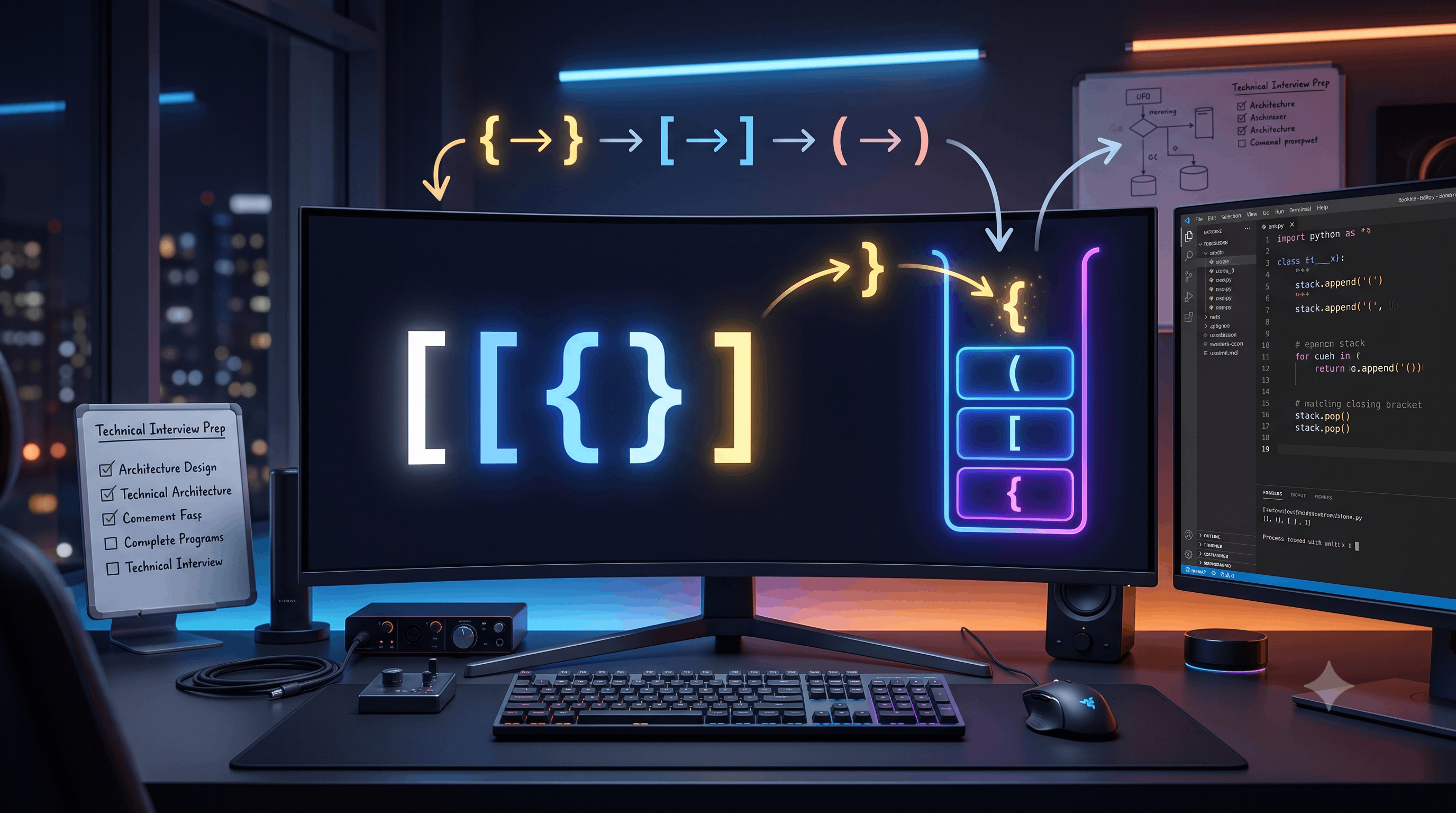 LeetCode #20: Valid Parentheses — Master the Stack Pattern
 LeetCode #15: 3Sum — Master Sorting, Two Pointers and Duplicate Handling
 Instruction vs Context in AI Prompts: How to Tell AI What to Do and What Information to Use
 Rust Structs and Enums: Building Powerful Data Models
 Dissecting the High-Level System Architecture of Booking.com
 Kanban vs. Scrum: Which Agile Methodology to Choose?
 The Scaling Journey of LinkedIn: From Startup to Professional Powerhouse
 Mastering Code Review: A Guide for Reviewers and PR Creators
 ChatGPT: Unveiling the Power of AI in Conversational Experiences with Kairos Coders

Kairos Coders are here to help
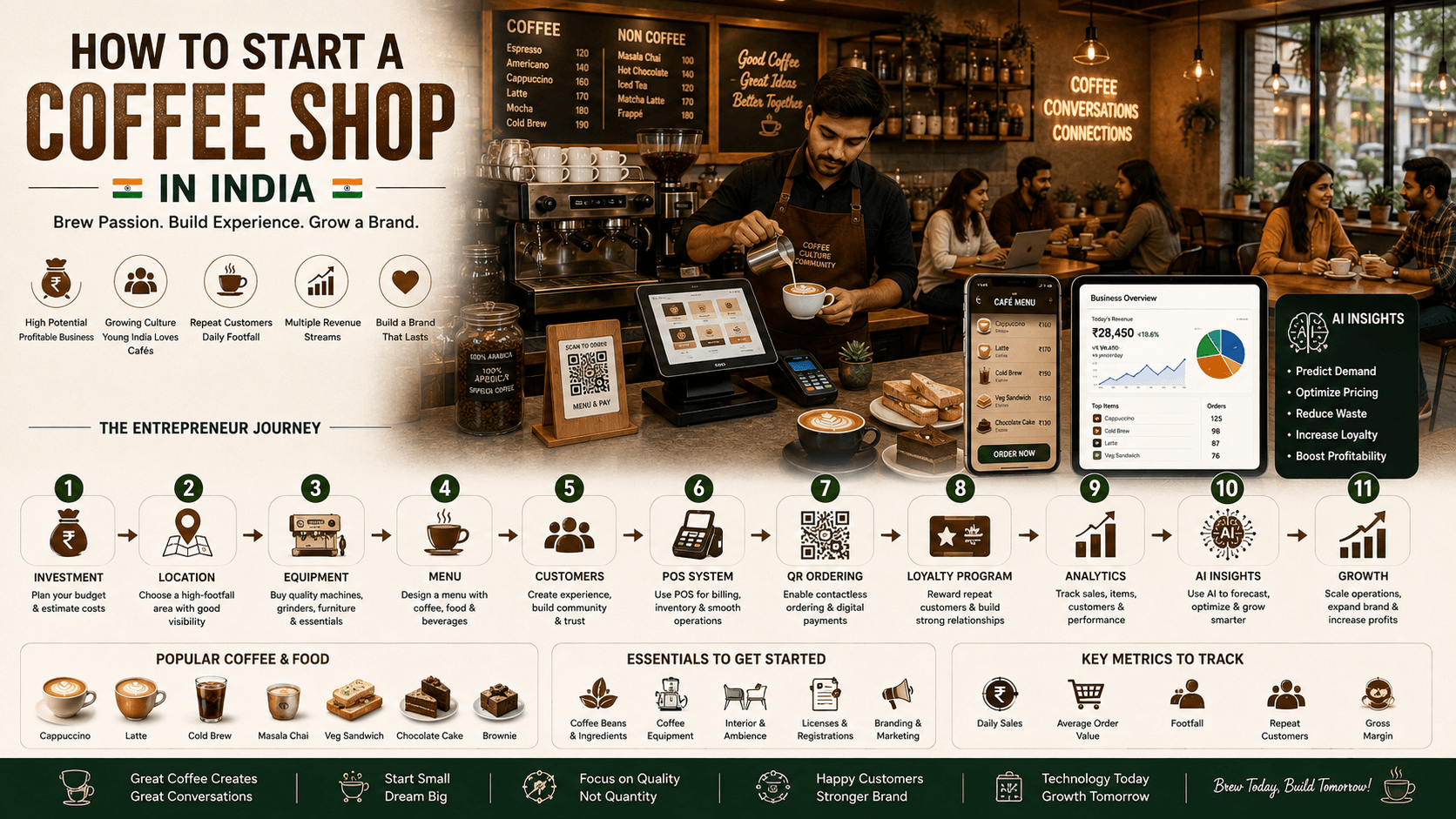
India's café culture has changed dramatically.
Coffee is no longer limited to traditional restaurants and office cafeterias. Today, cafés have become places where people work, study, meet friends, have dates, attend meetings, create content, and spend time.
That creates an interesting business opportunity.
But starting a coffee shop is very different from simply knowing how to make good coffee.
You need to understand:
A successful café isn't just selling coffee.
It is selling coffee + convenience + experience + atmosphere.
Coffee has several characteristics that make it attractive as a business.
A good café can develop customers who visit several times a week.
A customer may enter for a ₹100 coffee and leave with:
Coffee + Sandwich + Dessert
turning a small purchase into a ₹300–₹500 order.
You can build:
Coffee shops are highly visual.
Interior design, cups, packaging, music, lighting and branding can all become part of the product.
Before calculating investment, decide what you're actually building.
Small space.
Limited seating.
Focused on:
Lower setup cost and potentially faster operations.
A small café with:
This is one of the most common independent café formats.
Higher investment.
Focus on:
The customer isn't simply purchasing coffee.
They're purchasing an experience.
Target:
You can provide:
This changes the business model because customers may stay significantly longer.
Your challenge becomes:
How do you maximize revenue per seat?
Investment varies enormously depending on location, size and positioning.
An illustrative small café could look like this:
| Expense | Approx. Budget |
|---|---|
| Security deposit/advance | ₹1,00,000 |
| Interior work | ₹2,00,000 |
| Coffee machine | ₹1,50,000 |
| Grinder | ₹30,000 |
| Refrigerator | ₹40,000 |
| Kitchen equipment | ₹75,000 |
| Furniture | ₹75,000 |
| POS system | ₹20,000 |
| Signage & branding | ₹30,000 |
| Initial inventory | ₹50,000 |
| Licenses/miscellaneous | ₹25,000 |
| Working capital | ₹1,00,000 |
| Illustrative Total | ₹8,95,000 |
These numbers are examples rather than fixed market costs.
A small takeaway kiosk could cost considerably less.
A premium café in a major city can require many times this amount.
One common mistake is purchasing expensive equipment first.
Instead:
Menu → Volume → Equipment → Kitchen Layout
not:
Equipment → Figure Out What to Sell
For example, if your business is primarily:
Espresso + Americano + Cappuccino + Latte
your equipment requirements are different from a café serving:
Coffee + Pizza + Pasta + Burgers + Desserts + Shakes.
The larger the menu, the more complicated your kitchen becomes.
A café may need equipment such as:
The core of many espresso-based drinks.
Freshly ground coffee requires consistent grinding.
For milk, dairy products and other ingredients.
Useful for cold coffee, shakes and smoothies.
For baked items and certain food products.
Useful for quick-service food.
For billing and sales tracking.
Important for beverage consistency and equipment maintenance.
Equipment quality should match your business model.
A small takeaway café doesn't necessarily need the same equipment as a specialty coffee shop.
A beautiful café in the wrong location can fail.
Look for:
But don't simply ask:
"Is this a busy road?"
Ask:
"Are the people passing here my customers?"
A premium coffee shop may perform better near offices and affluent residential communities than in a location with massive but irrelevant foot traffic.
Suppose your café gets:
100 customers/day
and average order value is:
₹220
Then:
100 × ₹220 = ₹22,000/day
For 30 days:
₹22,000 × 30 = ₹6,60,000/month
That's revenue.
Now subtract:
Your actual profit will be much lower than your revenue.
Consider two cafés.
200 customers/day
Average order: ₹100
Revenue = ₹20,000/day
120 customers/day
Average order: ₹250
Revenue = ₹30,000/day
Café B has fewer customers but higher revenue.
This is why you shouldn't focus only on customer count.
Track:
Average Order Value (AOV)
A customer orders:
Cappuccino — ₹150
You can offer:
Cappuccino + Sandwich — ₹249
Or:
Coffee + Dessert — ₹299
Or:
2 Coffee + Fries — ₹399
The customer gets additional value.
The café gets higher revenue per transaction.
This is called cross-selling and upselling.
Don't make your menu enormous.
A simple café could start with:
A focused menu is easier to operate and control.
Not every product on your menu is equally valuable.
Imagine:
| Product | Price | Cost | Contribution |
| Americano | ₹120 | ₹35 | ₹85 |
| Cappuccino | ₹160 | ₹50 | ₹110 |
| Cold Coffee | ₹190 | ₹65 | ₹125 |
| Sandwich | ₹180 | ₹85 | ₹95 |
| Brownie | ₹140 | ₹45 | ₹95 |
Now you know which products contribute more.
You can promote products based on:
Popularity + Profitability
rather than simply choosing items customers like.
Suppose a sandwich sells for:
₹180
But the actual cost is:
₹100
Your contribution is:
₹80
Now imagine:
The effective contribution becomes lower.
That's why every menu item should have a proper recipe costing.
Calculate:
Ingredients + Packaging + Direct Costs = Product Cost
Then decide your selling price.
Cafés deal with many perishable ingredients:
If your forecasting is poor, you may purchase more than you can sell.
That turns into:
Inventory → Expiry → Waste → Lost Money
Technology can help here.
A modern POS system can track:
Imagine opening your dashboard every morning and seeing:
Yesterday's Sales: ₹24,850

Orders: 143

Average Order: ₹173.77

Top Product:
Cold Coffee

Top Category:
Beverages

Slowest Product:
Pasta

Peak Hour:
6 PM – 8 PM
This is much more useful than simply knowing:
"Yesterday we made ₹24,850."
Customers can scan a QR code placed on the table.
They see:
Digital Menu → Select Items → Place Order
The order goes directly to the café.
This can reduce:
And you can update prices or products digitally.
A printed menu is useful.
But a digital menu can provide:
You can even create different menus for:
Breakfast
Lunch
Evening
Special Events
without printing new menus every time.
A café should know its regular customers.
For example:
Customer A
Visits 12 times/month.
Usually orders:
Cappuccino + Sandwich
Average order:
₹280
That's valuable information.
You could build a loyalty program:
10 visits → Free beverage
or:
Spend ₹2,000 → ₹200 reward
or:
Members receive one monthly complimentary beverage.
The objective is simple:
Turn occasional customers into regular customers.
Imagine your customer database shows that a customer regularly orders cold coffee.
You can send an occasional relevant offer:
"Cold Coffee Week ☕
Get your favorite cold coffee + brownie combo today."
You don't need a complex marketing platform to start.
A small café can begin with:
WhatsApp Business + Customer Database + Good Offers
A physical café is limited by its location.
Delivery expands the potential customer base.
You can use:
But remember:
Delivery revenue ≠ dine-in revenue economics.
Delivery commissions, packaging and discounts can significantly affect margins.
Therefore, calculate profitability separately for:
Dine-in
Takeaway
Delivery
Suppose your data shows:
Dine-in average order = ₹350
Takeaway average order = ₹220
Delivery average order = ₹300
But delivery has additional commissions and packaging costs.
Now you can calculate contribution separately.
This allows you to answer:
Which channel actually makes us the most money?
That's much better than simply saying:
"Our delivery sales are growing."
AI doesn't need to make coffee.
It can improve the business behind the counter.
Predict tomorrow's expected demand.
Recommend quantities of:
Identify products with:
High sales + high margin
and:
Low sales + low margin
Identify customer segments.
Generate campaigns and social media content.
Ask:
"Why did our profit decrease this month?"
An AI system can analyze sales, expenses, product mix and operational data to identify possible reasons.
The future café could look like:
                     CUSTOMER
                        │
          ┌─────────────┼─────────────┐
          ↓             ↓             ↓
       WALK-IN        QR ORDER      ONLINE
          │             │             │
          └─────────────┼─────────────┘
                        ↓
                       POS
                        ↓
             ┌──────────┴──────────┐
             ↓                     ↓
         INVENTORY              CRM
             ↓                     ↓
             └──────────┬──────────┘
                        ↓
                    ANALYTICS
                        ↓
                       AI
                        ↓
        ┌───────────────┼────────────────┐
        ↓               ↓                ↓
     Demand         Marketing        Business
   Forecasting       Insights         Insights
This is the technology layer that can sit behind a modern café.
This is important.
Many entrepreneurs think:
"I need an app."
Maybe you don't.
At the beginning, your priorities should be:
Good coffee
Good food
Good location
Good service
Good economics
Then:
POS
Digital menu
Loyalty
Then eventually:
Online ordering
Customer analytics
AI
Technology should solve an actual problem.
Your first marketing isn't necessarily Instagram ads.
It's:
People should know your café exists.
Make sure customers can discover your business when searching nearby.
Post:
Work with:
Give customers a reason to try you.
But don't train customers to expect permanent discounts.
Why would someone choose your café instead of another café?
Maybe:
Coffee
Maybe:
Interior
Maybe:
Music
Maybe:
Wi-Fi
Maybe:
Food
Maybe:
Location
Maybe:
Community
The strongest cafés often combine several of these.
A customer should remember something about your café.
Beautiful interiors don't guarantee profitability.
Equipment should follow the business model.
More products mean more complexity.
You need to know exactly what each item costs.
High delivery revenue can still produce weak margins.
Perishable inventory requires careful forecasting.
Getting customers once isn't enough.
If you don't measure it, you can't improve it.
Once your first café becomes profitable, document everything.
Create:
Standard recipes
Standard portions
Supplier list
Equipment specifications
Staff training
Opening checklist
Closing checklist
Cleaning procedures
Inventory procedures
Customer service standards
Now you have an operating system.
Then:
Store 1
↓
Prove the model
↓
Document operations
↓
Store 2
↓
Central purchasing
↓
Multiple locations
↓
Brand
↓
Franchise
Technology becomes increasingly valuable as the number of locations grows.
Imagine you eventually operate five cafés.
Your central dashboard could show:
                    TOTAL
                  ₹18.4L/month

       ┌────────────┼────────────┐
       ↓            ↓            ↓

     STORE 1      STORE 2      STORE 3
     ₹3.8L        ₹4.2L        ₹3.1L

       ↓            ↓            ↓

     STORE 4      STORE 5
     ₹3.9L        ₹3.4L
Now you can compare:
The business becomes measurable.
Starting a coffee shop isn't simply about making great coffee.
It's about building a repeatable business.
You need:
A good location
A focused menu
Consistent products
Controlled costs
Strong customer experience
Repeat customers
Good marketing
Technology
The café of the future may still have the same espresso machine, coffee beans and barista.
But behind that counter will be a much smarter system.
Customer behavior will be measured.
Inventory will be tracked.
Demand will be forecast.
Marketing will be personalized.
And business decisions will increasingly be driven by data.
A coffee shop doesn't need to become a software company.
It simply needs to use software intelligently.
Start with:
QR Payments → POS → Inventory → Digital Menu → Customer Data → Loyalty → Analytics → AI
Technology should remain invisible to the customer when possible.
The customer should simply experience:
Better coffee. Faster service. Better offers. Better experience.
That's what technology should accomplish.
Pixels to Perfection Design that Impresses